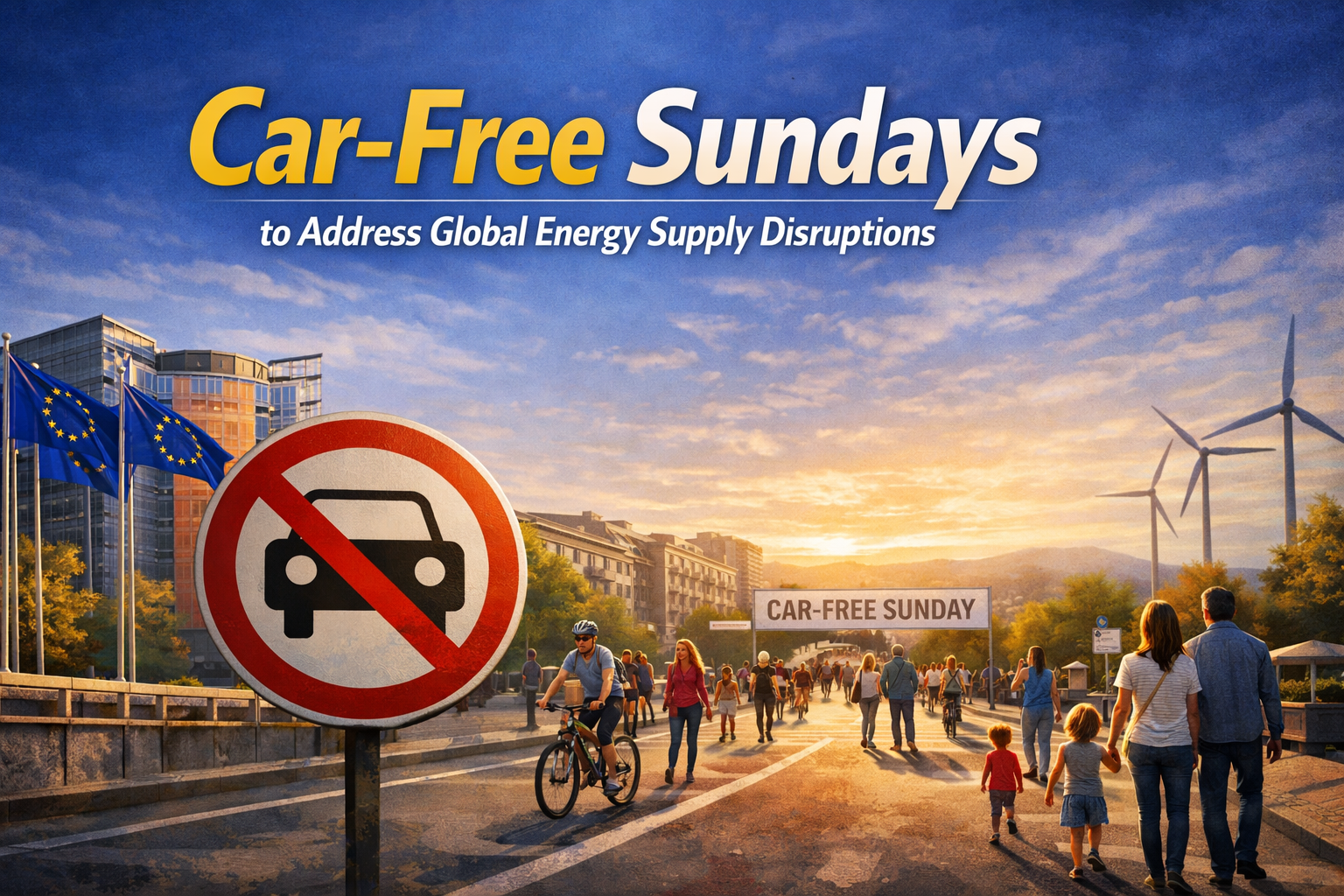
The U.S. war with Iran has severely disrupted the flow and availability of oil, leading to higher prices and localized shortages as millions of barrels per day are unable to reach global markets due to damaged infrastructure and blocked shipping routes. As a result, Dan Jørgensen—who serves in the European Commission as the European Commissioner for Energy and Housing, overseeing the EU’s energy and housing strategies—called on EU nations on March 31, 2026, to take measures such as implementing car-free Sundays to reduce the impact of oil shortages.
Euronews reported the following regarding the global energy crisis:
• “Energy Commissioner Dan Jørgensen urged EU countries on Tuesday to take aligned, coordinated action to curb oil and gas consumption and optimize storage reserves, warning that the crisis’s impact will not be short-lived.” [1]
• “Jørgensen spoke on the sidelines of an emergency meeting of European energy ministers … The ministers were urged to take coordinated measures to curb soaring oil and natural gas prices, as the war in Iran and the closure of the Strait of Hormuz threaten prolonged price increases and possible supply disruptions.” [1]
• “EU countries may consider fuel rationing, remote work, and even ‘car-free Sundays’—a measure from the 1970s energy crisis—to curb oil and gas demand, as prices have surged 70% and 50%, respectively.” [1]
The Roman Catholic Church and Evangelical Christianity will certainly welcome measures like “car-free Sundays” because they closely align with their long-standing calls to make Sunday a universal day of rest for society. Even when presented in secular terms—such as conserving energy or protecting the environment—these policies reinforce the idea of a shared weekly day of rest centered on Sunday. The more people see and experience these kinds of Sunday policies, the more they become used to treating Sunday as a special day for less activity, family time, and worship. Over time, this can make it easier for society to accept even stronger Sunday rest practices in the future.
Sources
 0
0 0
0 0
0
Leave a Reply