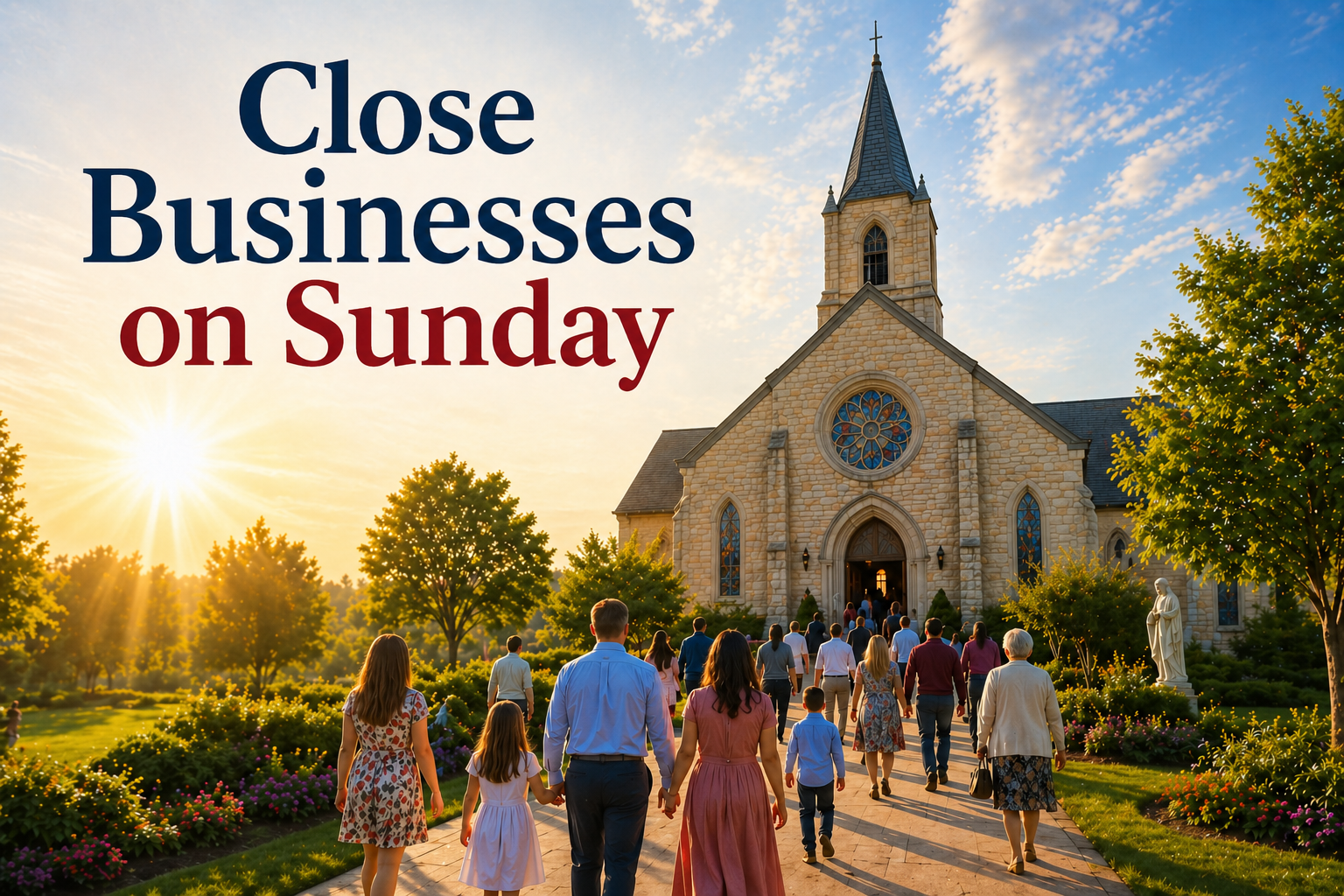
On April 22, 2026, the Roman Catholic Diocese of Green Bay, Wisconsin, published an article in its ”On Mission” magazine titled “What Does It Mean to Reclaim Sunday?” The plan to reclaim Sunday involves closing businesses on that day, with the aim of reshaping society around a unified day of rest and worship. The message extends far beyond the walls of the church and targets daily life directly, urging people to change their behavior and to cease “buying and selling” on Sundays—language that parallels the warning of Revelation 13:17.
The Catholic Diocese’s magazine stated the following:
•, “Closing on Sundays—taking a break from buying and selling, and resting from work—is not the only way to follow the third commandment, but it is a great place to start.” [1]
•, “This simple yet impactful act sets small and large businesses apart and has been done since the dawn of Christianity. While other stores or restaurants may close over the weekend, companies like Hobby Lobby and Chick-fil-A are known for closing on Sundays explicitly to make time for Christian worship.” [1]
•, “Sunday, the Lord’s Day, isn’t the same as the Jewish Sabbath, but it is a similar celebration based on the Resurrection of Jesus Christ. Keeping the Lord’s Day holy, and reclaiming Sunday, is not simply about rest or setting the day apart, it is about divine worship.” [1]
•, “Experiencing the closure of businesses on the Lord’s Day, both as a consumer and laborer, can remind the faithful that divine worship is the top priority on that day and participating in commerce can take away from our ability to participate in divine worship.” [1]
When the Catholic Church points to businesses such as Hobby Lobby and Chick-fil-A as successful examples, it is attempting to demonstrate that closing on Sunday is both practical and beneficial. In doing so, it is seeking to normalize the idea within the culture that Sunday should—and can—be different.
Rome’s underlying message is clear: Sunday commerce competes with worship, and limiting business activity on that day will elevate spiritual priorities. As this idea spreads, it will shift public thinking toward viewing the closure of commercial activity on Sunday as a necessary step for the “common good.” History demonstrates that what begins as an invitation and a call to protect Sunday will eventually lead to coercive laws mandating Sunday rest.
“Fearful is the issue to which the world is to be brought. The powers of earth, uniting to war against the commandments of God, will decree that all, “both small and great, rich and poor, free and bond,” [Revelation 13:16.] shall conform to the customs of the church by the observance of the false sabbath. All who refuse compliance will be visited with civil penalties, and it will finally be declared that they are deserving of death” (Great Controversy, p. 604).
Sources
[1] https://onmissionmedia.com/what-does-it-mean-to-reclaim-sunday/
 0
0 0
0 0
0
Leave a Reply