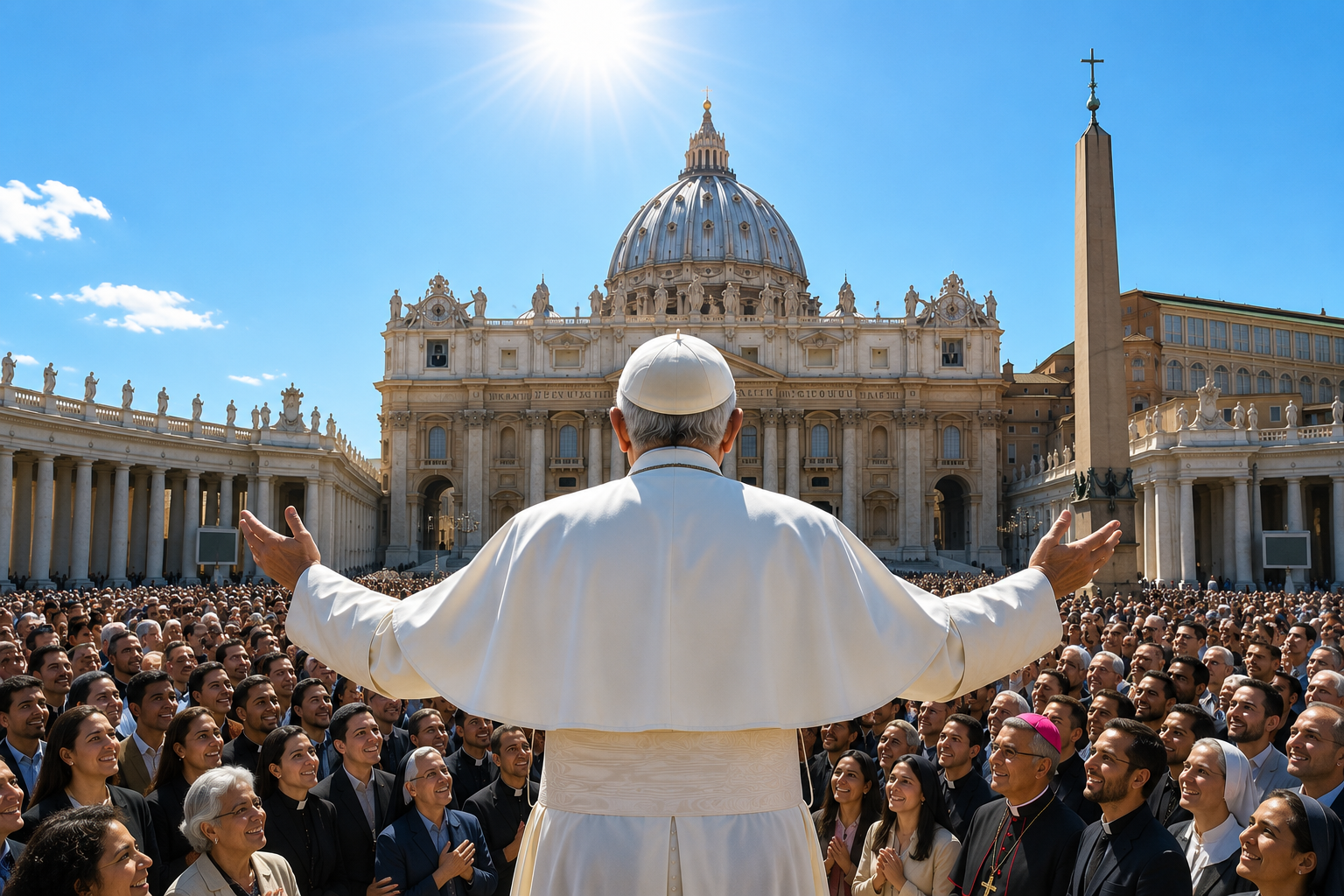
The Vatican’s recent excommunication of the leaders and members of the ultra-traditionalist Society of Saint Pius X (SSPX) has raised questions about the Roman Catholic Church’s understanding of unity. After the SSPX proceeded with the consecration of four bishops without Papal approval, the Vatican announced their excommunications, emphasizing that unity requires approval and submission to the authority of the Pope.
The Associated Press reported the following regarding the excommunication of members of the conservative movement:
• “The Vatican responded aggressively Thursday to a traditionalist group that consecrated bishops without the pope’s consent, declaring the Society of St. Pius X had formally broken with the Catholic Church. It also excommunicated its bishops and priests, and warned its faithful that they too face the harshest sanctions in the church.” [1]
• “The society, known by its acronym SSPX, celebrates the ancient Latin Mass and opposes the modernizing reforms of the Catholic Church, which it considers to be rife with heresies and errors. While a fringe movement on the Catholic right, the SSPX has been a thorn in the Vatican’s side for five decades because it claims to be even more Catholic than the Holy See.” [1]
This shows a blatant contradiction in the Vatican’s repeated calls for unity and fraternity and the value and dignity of every person. On one hand, Rome continually invites Protestants, Orthodox Christians, Anglicans, and other separated Christian bodies to pursue “unity,” “fraternity,” “solidarity,” and a “common witness.” On the other hand, when a group that identifies as Roman Catholic independently ordains bishops without Papal authorization, Rome responds by declaring that the group is outside of its communion and subject to excommunication.
Numerous Protestant denominations ordain their own bishops, pastors, and ministers without Papal authorization, yet Rome continues to pursue ecumenical dialogue and cooperation with them. By contrast, when the Society of Saint Pius X (SSPX) ordained bishops while claiming to remain Roman Catholic, the Vatican imposed excommunication—its most severe canonical penalty—because the act directly challenged Papal authority.
If Pope Leo XIV can extend dialogue and cooperation to churches that have existed outside Rome’s jurisdiction while excommunicating a traditionalist Catholic movement that refuses Papal oversight, then Rome’s definition of “unity” is not diversity within Christianity but conformity to Papal authority. In this context, the language of fraternity functions as an invitation to accept the leadership of the Papacy rather than as an affirmation of equal standing among Christian bodies.
The Vatican’s position means that true unity is inseparable from alignment with the Pope. Apparently, dialogue alone is not enough. Rome’s ecumenical work isn’t about peaceful coexistence among different Christian traditions. Officially, the goal is visible submission to the leadership of the Roman Catholic Church. Consequently, Rome can now simultaneously engage in ecumenical dialogue with other churches that reject papal authority while sanctioning its members, who, in its judgment, are also rejecting papal authority. That is a mystery, which the Bible calls the “mystery of iniquity” (2 Thessalonians 2:7).
“The Roman Church is far-reaching in her plans and modes of operation. She is employing every device to extend her influence and increase her power in preparation for a fierce and determined conflict to regain control of the world, to re-establish persecution, and to undo all that Protestantism has done” (Great Controversy, p. 565).
Sources
 0
0 0
0 0
0
Leave a Reply