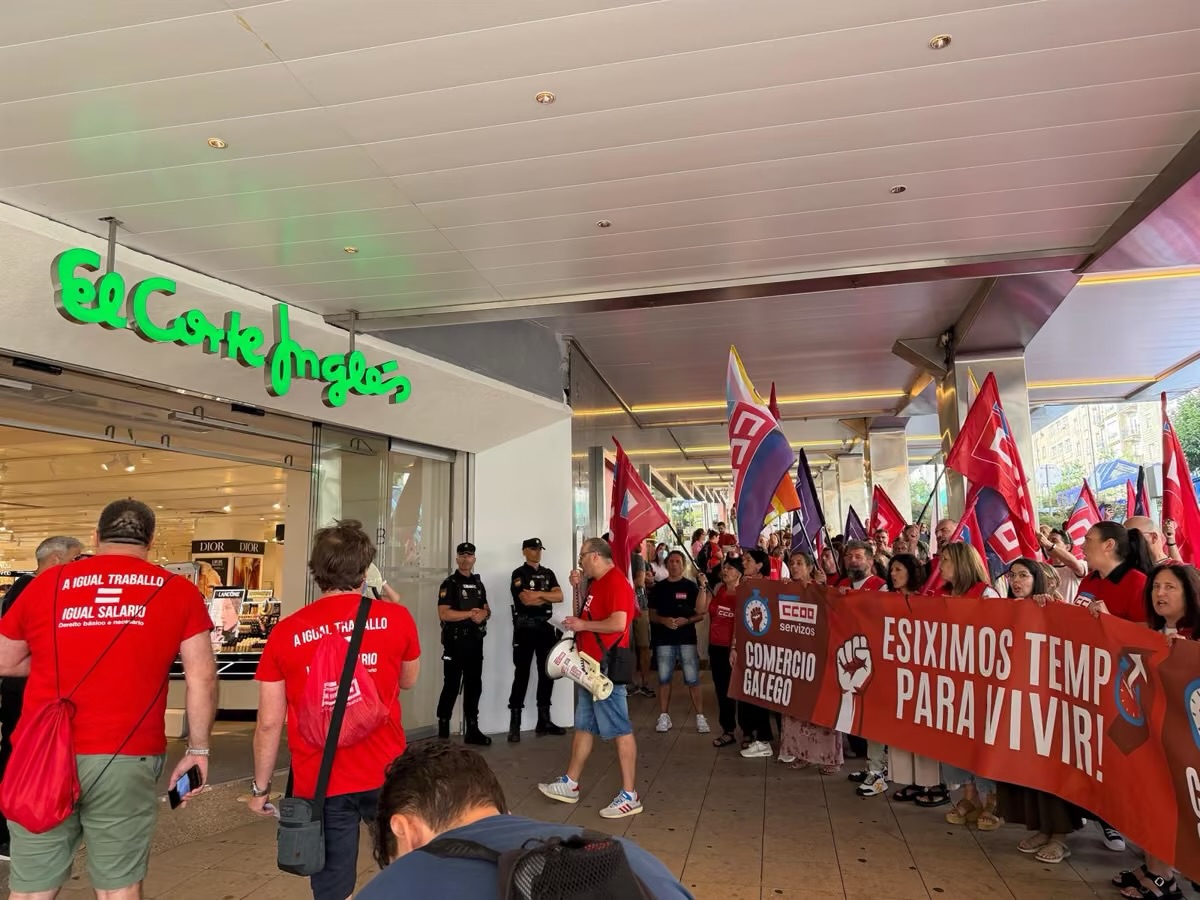
Strikes and organized protests are escalating across Europe as pressure grows to expand Sunday store openings. As Sunday trading becomes increasingly normalized, labor unions and churches are pushing back, calling for Sunday to remain protected as the common day of rest. In Spain, demonstrations are already underway, with a labor strike planned for August 15, 2026, in protest against relaxed trading restrictions that allow more retailers to operate on Sundays.
Europa Press published the following on August 11, 2026:
• “Nearly a hundred retail workers, called together by the Workers’ Commissions union, protested this Tuesday morning in Vigo against working on Sundays and holidays: ‘We demand time to live’.” [1]
• “Union representatives and off-duty workers have gathered to put an end to the ‘collective abuse’ of opening several Sundays and holidays a year.” [1]
• “Chanting slogans like ‘Closed on holidays, respect your rights,’ ‘Working non-stop doesn’t allow us to balance work and family life,’ and ‘No sales on holidays. Rest must be defended,’ workers have lamented the decision to authorize several openings on Sundays and holidays this summer without consulting the unions.” [1]
• “The general secretary of the Federation of Services of Workers’ Commissions Galicia, Iván Cordeiro, explained that this protest is the prelude to the strike called for next Saturday, August 15, by several unions.” [1]
These Sunday-rest agitations are not going away. Growing disputes over Sunday work, family time, retail schedules, and workers’ rights are steadily keeping the Sunday question before the public. When labor unions take to the streets, churches demand stronger Sunday protections, and businesses push for expanded Sunday trading, governments are forced to respond to these competing interests. In this context, Sunday is no longer a religious or workers dispute—it becomes a significant public policy issue.
The ultimate controversy will be over worship, obedience, and faithfulness to God. As the controversy over the Sunday question continues to intensify, the struggle will eventually move from strikes, protests, and public agitation to legislation and enforcement. When the state establishes Sunday as an official day of rest, people will be required to comply with civil mandates, ultimately bringing them face-to-face with a choice: obey the commandments of God or submit to the mandates of men.
Sources
 0
0 0
0 0
0
Hello. I’m SDA and Spanish. In Spain, shops only open about 5 Sundays per year (specially on Christmas). The rest of the year, only cinemas are open, and petrol stations and some food restaurants, but not all the shops.