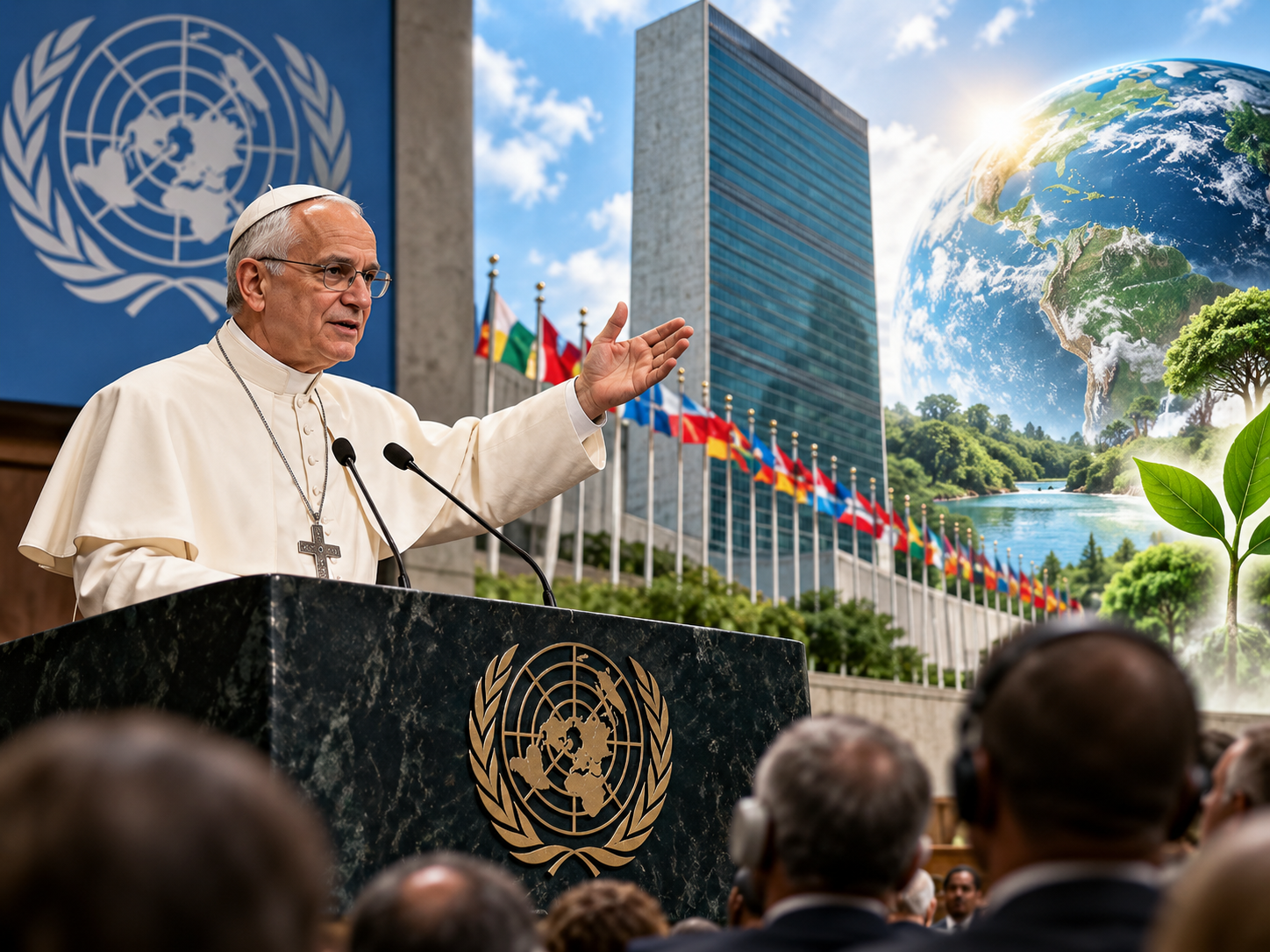
The Holy See gave its formal press briefing on Pope Leo XIV’s September 25–28 visit to France, and Vatican spokesman Matteo Bruni specifically identified the environment as an important element of the Pope’s visit to the United Nations Educational, Scientific and Cultural Organization (UNESCO) headquarters in Paris. Leo will deliver a formal address there on September 25 before the international body and discuss matters related to the environment.
Pope Leo XIV will first meet the French president and then address government authorities before going to UNESCO. The Vatican News published the following:
•, “Pope Leo XIV’s September 25–28 Apostolic Journey to France will include meetings with civil authorities, young people and the Church, a visit to UNESCO in Paris, and an encounter in Metz focused on Europe, peace and unity.” [1]
•, “During a press conference held at the Holy See’s Press Office on Friday, September 18, the Director of the Press Office, Matteo Bruni, illustrated the Pope’s Journey, which will take him to Paris, Lourdes, and the northeastern city of Metz.” [1]
• “The Director of the Holy See Press Office then explained how UNESCO is a place where ‘humanity reflects on itself, on its history, on its future,’ with a focus on the value of art and education as a vehicle for peace. He also noted how the environment will be an important element, as it is closely related to culture.“ [1]
Pope Leo’s ecological teaching—which this month has included ecological conversion, disregard for the environment as ecological sin, ecumenical environmental action, and the Vatican’s Theological Commission’s “Sabbath principle” of Sunday being the weekly day of rest—is now approaching one of the United Nations’ major international institutions. The issue is not whether Christians should care for creation. The issue is whether care for creation, Sunday rest, interfaith unity, economic policy, religious morality, government power, or the common good should be used to justify government-backed religious observance.
Revelation 13 describes a coming together of church and state during the final crisis in which the powers of earth move will ultimately employ civil authority in matters of worship. We are seeing this corrupt harmony taking place before our eyes:
“The union of the church with the state, be the degree never so slight, while it may appear to bring the world nearer to the church, does in reality but bring the church nearer to the world” (Great Controversy, p. 297).
Sources
 0
0 0
0 0
0
Leave a Reply