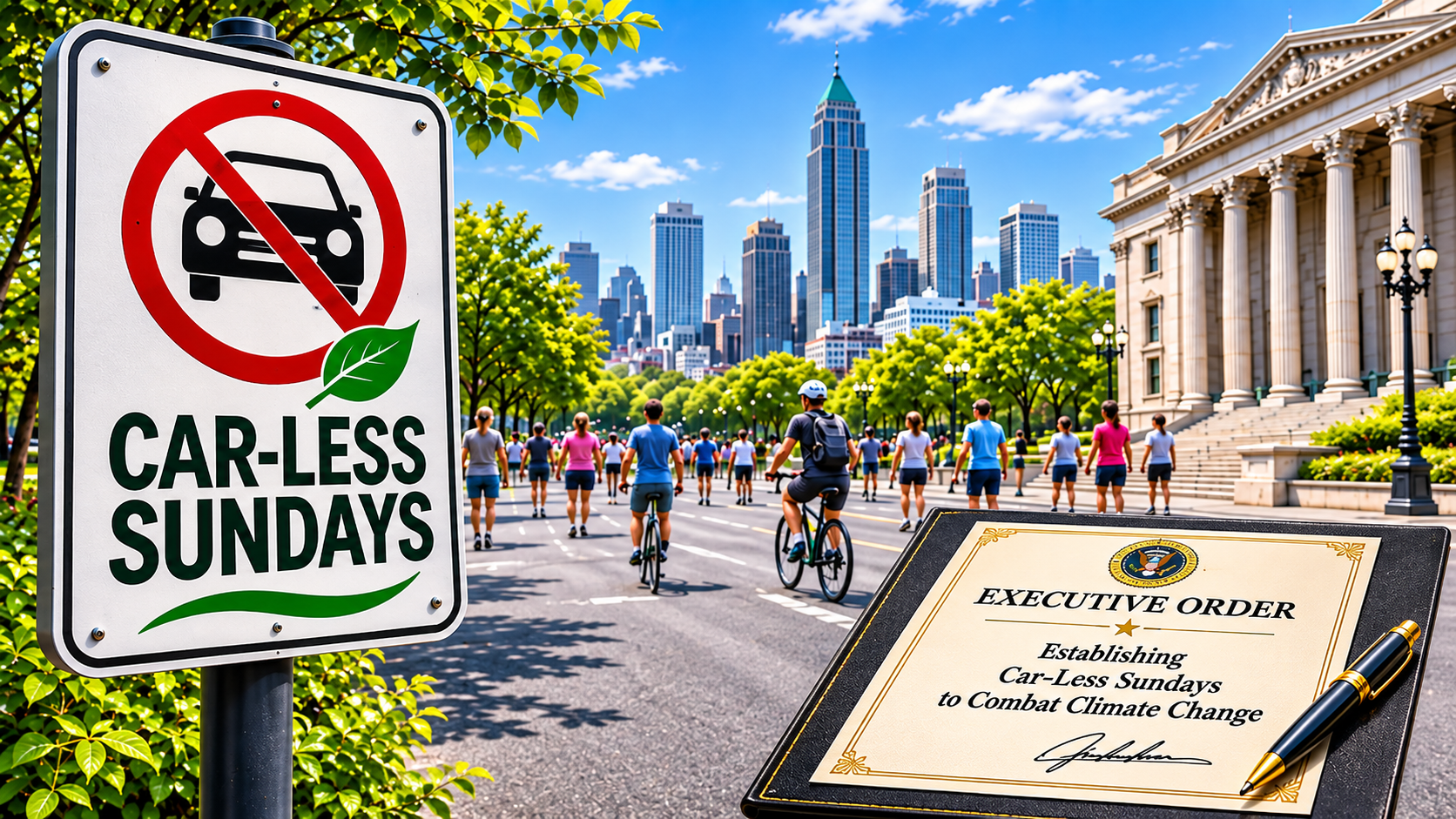
On November 16, 2026, the Philippine News Agency reported that Cagayan de Oro City’s Roads and Traffic Administration had announced a new Car-Less Sundays program as part of the government’s climate and environmental redevelopment efforts. The initiative aims to promote pedestrian and bicycle-friendly streets, encourage family recreation, and reduce traffic congestion. Established through an executive order, the Car-Less Sundays program will undergo a one-month trial period, with the possibility of becoming permanent if successful.
Philippine News Agency reported the following:
• “The city government here will launch car-less Sundays as part of its initiative to decongest traffic on major streets. In an interview on Monday, Roads and Traffic Administration chief Benedicto Ramiro said they will conduct the dry runs from Nov. 22 to Dec. 29 to observe the impact on vehicular traffic and the public’s acceptance.” [1]
• “For now, it is still under an executive order from the mayor, but if it works, it can become a city ordinance,’ he said.” [1]
• “The city’s center of commerce and events also holds historical significance as part of the city government’s climate and environmental redevelopment under Project Lunhaw, a climate-adaptive urban resiliency initiative that promotes walk-friendly and bike-friendly streets.” [1]
• “The car-free Sunday aims to transform the downtown area into a pedestrian-friendly, family-oriented space for walking, jogging, cycling and community activities.” [1]
This is a concrete example of civil authorities exercising executive authority to designate Sunday for an environmental initiative aimed at restricting vehicle traffic and reducing emissions, with the possibility of making these measures permanent through legislation. It demonstrates how sustainability and community recreation can serve as justifications for enacting Sunday regulations. This is not a voluntary effort; it is a government-mandated climate measure that makes a clear link between Sunday and environmental sustainability and resilience.
These themes reflect the environmental messages promoted by Pope Francis and Pope Leo XIV. For years, Rome has emphasized the relationship between Sunday rest, the Eucharist, care for creation, and the protection of Sunday as the day for rest and worship. These measures are not going away. They will only gain momentum in the weeks and months ahead, as Sunday increasingly becomes the focal point of government-directed initiatives promoting environmental sustainability, climate action, and a common day of rest.
Sources
[1] https://pna.gov.ph/article/cdo-launches-car-less-sundays-on-major-streets
 0
 0
 0
Leave a Reply