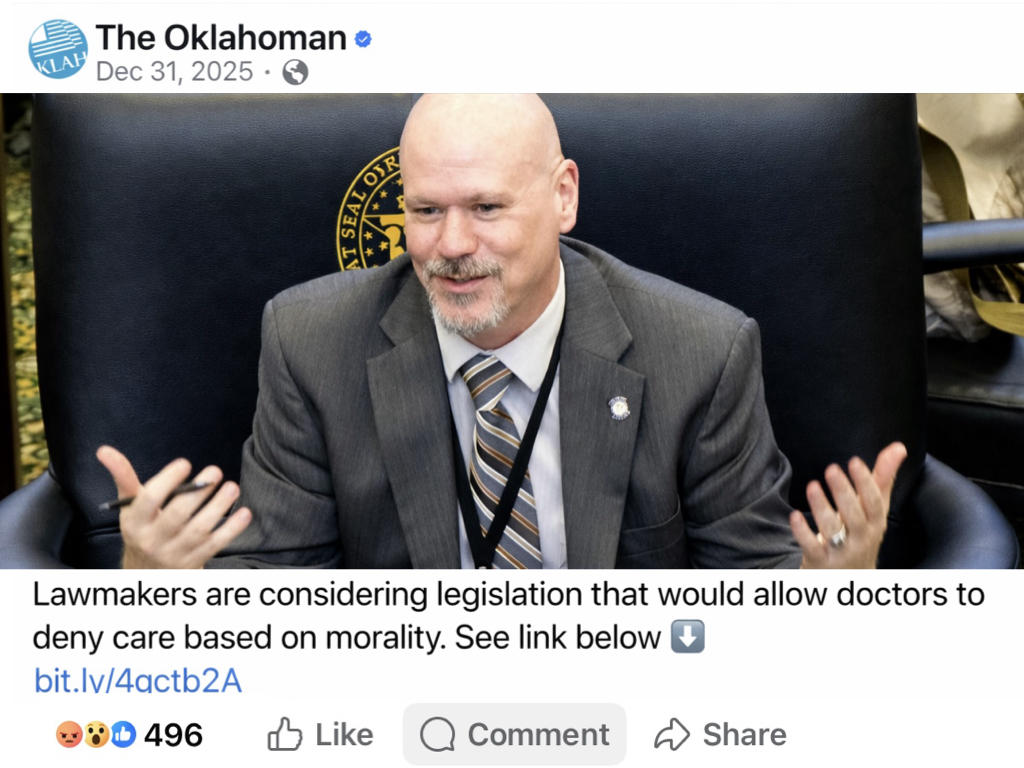
The Oklahoman, the largest daily newspaper in the state of Oklahoma, published an article on December 31, 2025, describing how some lawmakers are considering a law that would allow doctors to refuse treatment if it conflicts with their moral or religious beliefs. [1] Supporters of the proposal say it protects religious freedom, while critics warn that this kind of law will make it easier to justify broader religious-based legislation in the future.
The bill, if passed, would explicitly protect Christian doctors and other health care providers from having to perform abortions, provide LGBT-affirming care, or offer other services they consider objectionable. But once a legal precedent is established allowing medical professionals to refuse care based on personal moral standards, other employers and businesses could seek similar legal protections—such as closing on Sundays—by claiming the same kinds of so-called “moral” objections.
There is no doubt that doctors should not be forced to do things that go against what they consider morally wrong. But what will stop landlords, hotels, banks, grocery stores, and other businesses engaged in commerce from also refusing service, limiting access, or declining to buy or sell (Revelation 13:17) based on whether someone meets a defined standard of “moral” compliance?
The same legal justification used to pass a law allowing doctors to deny care based on morality can be applied more broadly to justify other so-called “moral regulations,” such as closing businesses on Sunday, restricting labor on that day, or penalizing those who do not comply with a shared moral day of rest.
Once the law establishes that personal religious morality can legally override professional and civic duties, religious minorities whose beliefs fall outside the dominant moral consensus risk being excluded and shut out of the coming mark-of-the-beast economy.
Sources
[1] https://www.facebook.com/share/p/17gQcSpPE8/
 0
0 0
0 0
0
Who sets the standard for this morality?
This is the question!
This is dangerous grounds.