“And there followed another angel, saying, Babylon is fallen, is fallen, that great city, because she made all nations drink of the wine of the wrath of her fornication.” Revelation 14:8.
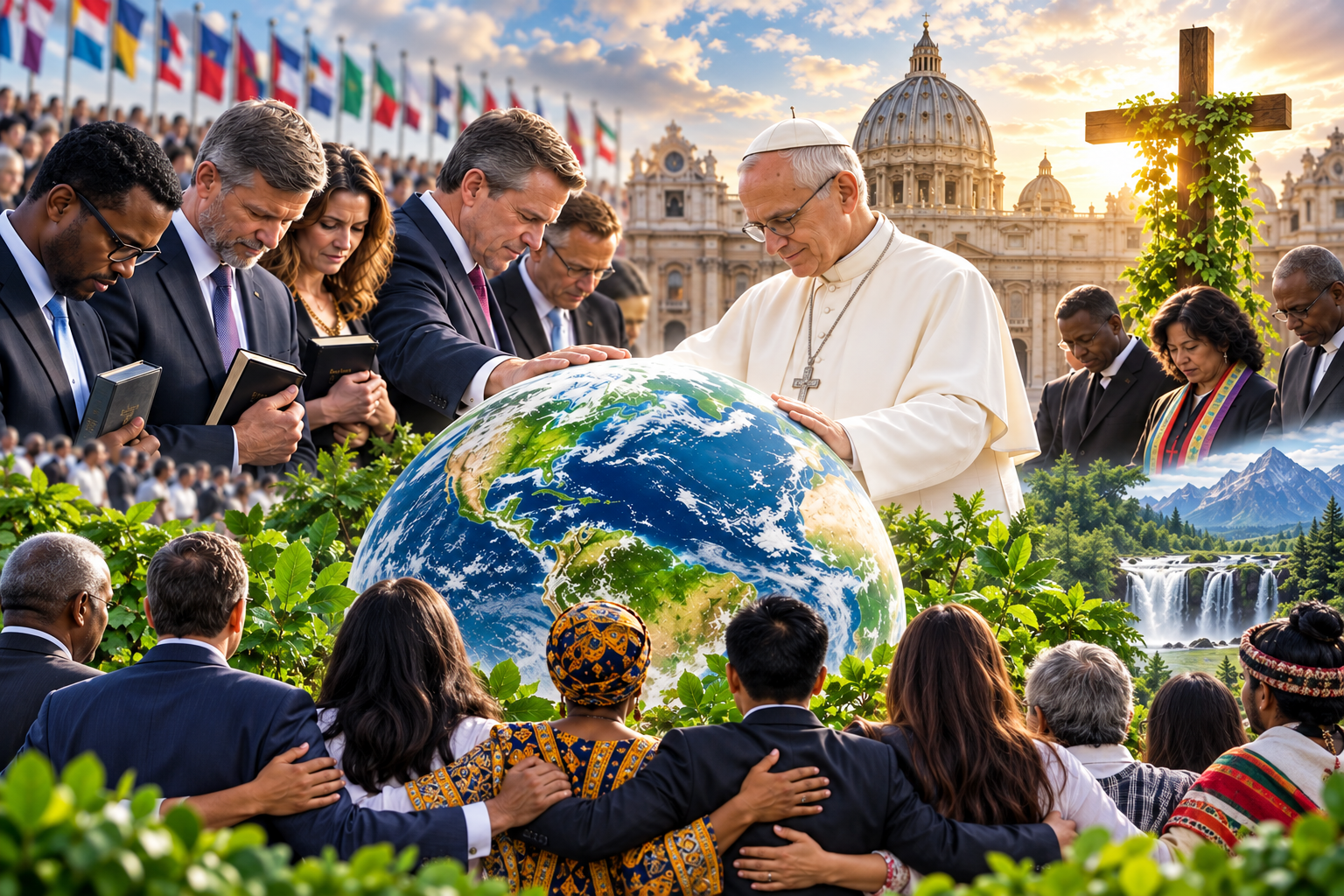
The World Evangelical Alliance (WEA) is the world’s largest international network of evangelical Christians, with the stated mission of strengthening and uniting Evangelical Protestants worldwide. Through its national and regional alliances, churches, denominations, and affiliated organizations, the WEA says it represents more than 630 million evangelical Christians globally. [1] In a significant development, the WEA has now officially embraced, for the first time, the Season of Creation liturgy into its Revised Common Lectionary and is promoting “Creation Sunday” as part of its growing environmental emphasis throughout its vast global network.
The World Evangelical Alliance Sustainability Center published the following:
• “The World Evangelical Alliance (WEA) gladly joins with other Christians across traditions in observing the Season of Creation (September 1–October 4), a global time of prayer and action for God’s gift of creation and our common home.” [2]
• “This year also marks an important new chapter. For the first time, the Feast of Creation in Christ has been formally included in the Revised Common Lectionary, with its first observance on Sunday, September 6, 2026. The World Evangelical Alliance supported the global effort that helped establish this celebration and is participating in the development of Creation Sunday resources for evangelical and other Free Church traditions.” [2]
• “For evangelicals, caring for creation is not optional but central to discipleship. Through the WEA Sustainability Center and Lausanne/WEA Creation Care Network (LWCCN), we encourage churches and evangelicals worldwide to integrate creation care into worship, teaching, prayer, service, sustainable practices, and advocacy for environmental justice, especially for the most vulnerable. During this Season of Creation, we invite our global fellowship of 600 million believers to enter more deeply into God’s vision of renewal—bearing witness to the Gospel through faithful care for our common home.” [2]
It is the Vatican who is responsible for advancing themes such as care for our common home, ecological conversion, and creation-centred spirituality, particularly through Laudato Si’. These ideas are increasingly appearing in ecumenical initiatives such as the Season of Creation and “Creation Sunday,” bringing Catholics, Protestants, and evangelicals together around environmental action and Sunday worship.
Protestantism used to uphold the Bible and used to maintain a sharper separation from Roman Catholic liturgical traditions. Today, unfortunately, they are daily embracing Rome’s errors and are increasingly participating in their mission. What is especially concerning from this new climate gospel is the incorporation of climate action with Sunday worship and calling it “Creation Sunday.”
Rome hasn’t changed. It is engaging in the same pattern associated with the “man of sin”—the presumption of altering divine authority, shifting attention from God’s commandments to human traditions, and redirecting the gospel’s emphasis to a new climate agenda. What Scripture presents as repentance from sin, salvation through Christ, obedience to God, and preparation for His return is being replaced with a new morality called ecological conversion, environmental sins, and a religious mission centered on saving the planet.
“And he shall speak great words against the most High, and shall wear out the saints of the most High, and think to change times and laws.” Daniel 7:25
“Who opposeth and exalteth himself above all that is called God, or that is worshipped; so that he as God sitteth in the temple of God, shewing himself that he is God.” 2 Thessalonians 2:4.
Sources
[1] https://worldea.org/weas-180-year-anniversary-message/
[2] https://wea-sc.org/season-of-creation-2026
 0
0 0
0 0
0
“1 And there came one of the seven angels which had the seven vials, and talked with me, saying unto me, Come hither; I will shew unto thee the judgment of the great whore that sitteth upon many waters:
2 With whom the kings of the earth have committed fornication, and the inhabitants of the earth have been made drunk with the wine of her fornication.
3 So he carried me away in the spirit into the wilderness: and I saw a woman sit upon a scarlet coloured beast, full of names of blasphemy, having seven heads and ten horns.
4 And the woman was arrayed in purple and scarlet colour, and decked with gold and precious stones and pearls, having a golden cup in her hand full of abominations and filthiness of her fornication:
5 And upon her forehead was a name written, MYSTERY, BABYLON THE GREAT, THE MOTHER OF HARLOTS AND ABOMINATIONS OF THE EARTH. ”
Revelation 17:1-5 KJV
“The woman (Babylon) of Revelation 17 is described as “arrayed in purple and scarlet color, and decked with gold and precious stones and pearls, having a golden cup in her hand full of abominations and filthiness:…and upon her forehead was a name written, Mystery, Babylon the Great, the mother of harlots.” Says the prophet: “I saw the woman drunk with the blood of the saints, and with the blood of the martyrs of Jesus.” Babylon is further declared to be “that great city, which reigneth over the kings of the earth.” Revelation 17:4-6, 18. The power that for so many centuries maintained despotic sway over the monarchs of Christendom is Rome. The purple and scarlet color, the gold and precious stones and pearls, vividly picture the magnificence and more than kingly pomp affected by the haughty see of Rome. And no other power could be so truly declared “drunken with the blood of the saints” as that church which has so cruelly persecuted the followers of Christ. Babylon is also charged with the sin of unlawful connection with “the kings of the earth.” It was by departure from the Lord, and alliance with the heathen, that the Jewish church became a harlot; and Rome, corrupting herself in like manner by seeking the support of worldly powers, receives a like condemnation.
Babylon is said to be “the mother of harlots.” By her daughters must be symbolized churches that cling to her doctrines and traditions, and follow her example of sacrificing the truth and the approval of God, in order to form an unlawful alliance with the world. The message of Revelation 14, announcing the fall of Babylon must apply to religious bodies that were once pure and have become corrupt. Since this message follows the warning of the judgment, it must be given in the last days; therefore it cannot refer to the Roman Church alone, for that church has been in a fallen condition for many centuries.” Geeat Controversy, page 382.2 – 382.3
“These records of the past clearly reveal the enmity of Rome toward the true Sabbath and its defenders, and the means which she employs to honor the institution of her creating. The word of God teaches that these scenes are to be repeated as Roman Catholics and Protestants shall unite for the exaltation of the Sunday.” Great Controversy, page 578.2
The political and religious worlds are truly coming together on a common goal. It is all happening just like we’ve been told.