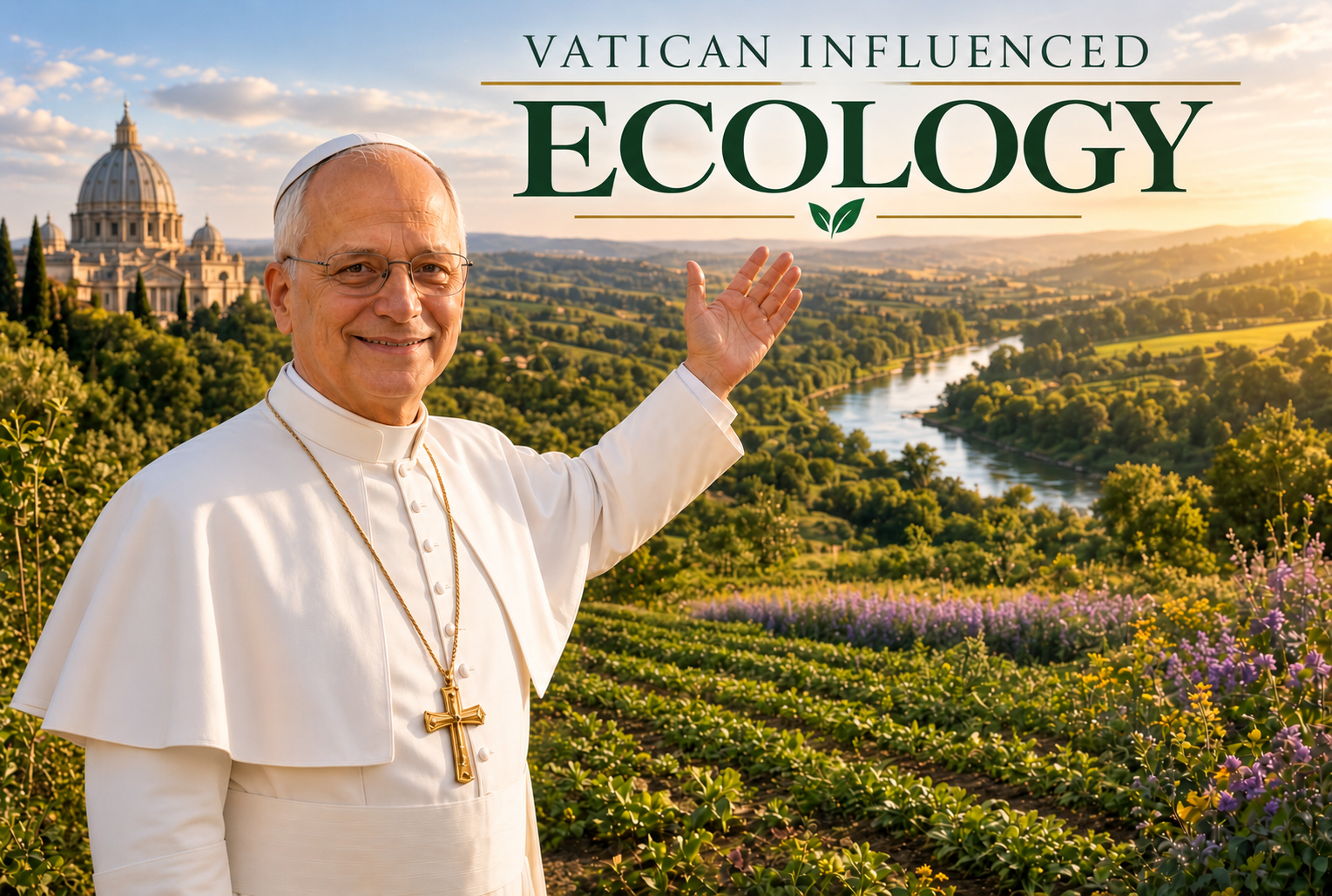
On September 12, 2026, Pope Leo XIV received participants in the “Fratelli Tutti: North-South Socio-Environmental Dialogue,” organized by Latin American and Caribbean Episcopal Council, the United States Conference of Catholic Bishops, and the Pontifical Commission for Latin America. The gathering included about 60 representatives from international organizations, banks, businesses, labor unions, foundations, universities, church bodies, and civil-society organizations.
Vatican News reported the following remarks from Pope Leo during this historic multi-sector gathering:
• “Pope Leo XIV received in audience, on the morning of this Saturday, September 12, the participants of the Meeting ‘Fratelli tutti: North-South Socio-environmental Dialogue,’ promoted by the Latin American and Caribbean Episcopal Council (Celam), the United States Conference of Catholic Bishops (USCCB) and the Pontifical Commission for Latin America.” [1]
• “Held in Rome, the meeting brought together approximately 60 representatives from ecclesial bodies, international institutions, regional cooperation banks, companies, unions, foundations, universities, and social organizations. Among the participants were the Brazilian Cardinals Jaime Spengler and Leonardo Steiner.” [1]
• “In his address, delivered in Spanish and English, the Holy Father praised the continuity of the North-South socio-environmental dialogue, developed over the past five years, and highlighted the importance of cooperation between different sectors of society.” [1]
• “According to the Pope, the great challenges of today exceed the capabilities of any isolated institution and require participation, collaboration, and shared responsibility.” [1]
• “Along this path, Leo XIV indicated the Social Doctrine of the Church as an instrument of discernment: ‘The Social Doctrine of the Church offers invaluable help in this regard. Many of the organizations present here know it, study it, and help to spread it. It is ‘not a manual of principles and norms to be applied, but a process of shared discernment. Its principles do not replace the decisions you must make; on the contrary, they offer criteria for judging whether these decisions truly respect human dignity and serve the common good’.” [1]
Pope Leo said that today’s major social, economic, and environmental challenges cannot be addressed by any single institution. Instead, they require the participation and collaboration of all sectors of society. He then explicitly presented Catholic Social Teaching as the foundation for discerning whether policies merely protect corporate and personal interests or genuinely advance what Rome defines as the common good.
The Pope is advocating a process that brings Catholic moral principles into conversation with environmental laws and political decision-making. It places the Papacy at the table with governments, international institutions, businesses, labor unions, and those shaping environmental and economic policy. This initiative is not simply telling people to care for creation. This is putting the Catholic Church in a position to influence the whole world and shape the public into an image of the beast.
Revelation 13 warns of a final crisis in which religious influence and civil power ultimately unite, producing laws that affect conscience and worship. The image of the beast will not appear overnight. The conditions that make such a church-state union possible will develop gradually as religious principles gain increasing influence within public policy and civil government.
“The Roman Church is far-reaching in her plans and modes of operation. She is employing every device to extend her influence and increase her power in preparation for a fierce and determined conflict to regain control of the world, to re-establish persecution, and to undo all that Protestantism has done” (Great Controversy, p. 565).
Sources
 0
0 0
0 0
0
A thought struck me as outside the SDA box while reading this.
This is exactly what the rest of the world wouldn’t mind unfolding. It doesn’t know the world will wear out like a garment. It doesn’t know the the elements will melt under fervent heat. It believes Jesus will rule from Jerusalem in a third temple cut out by human hands. It doesn’t believe Jesus said “my kingdom is not of this world”.
The mark of the beast will be eucharist worship on the Sun-day by universal law. Which will be the indirect worship of Satan!